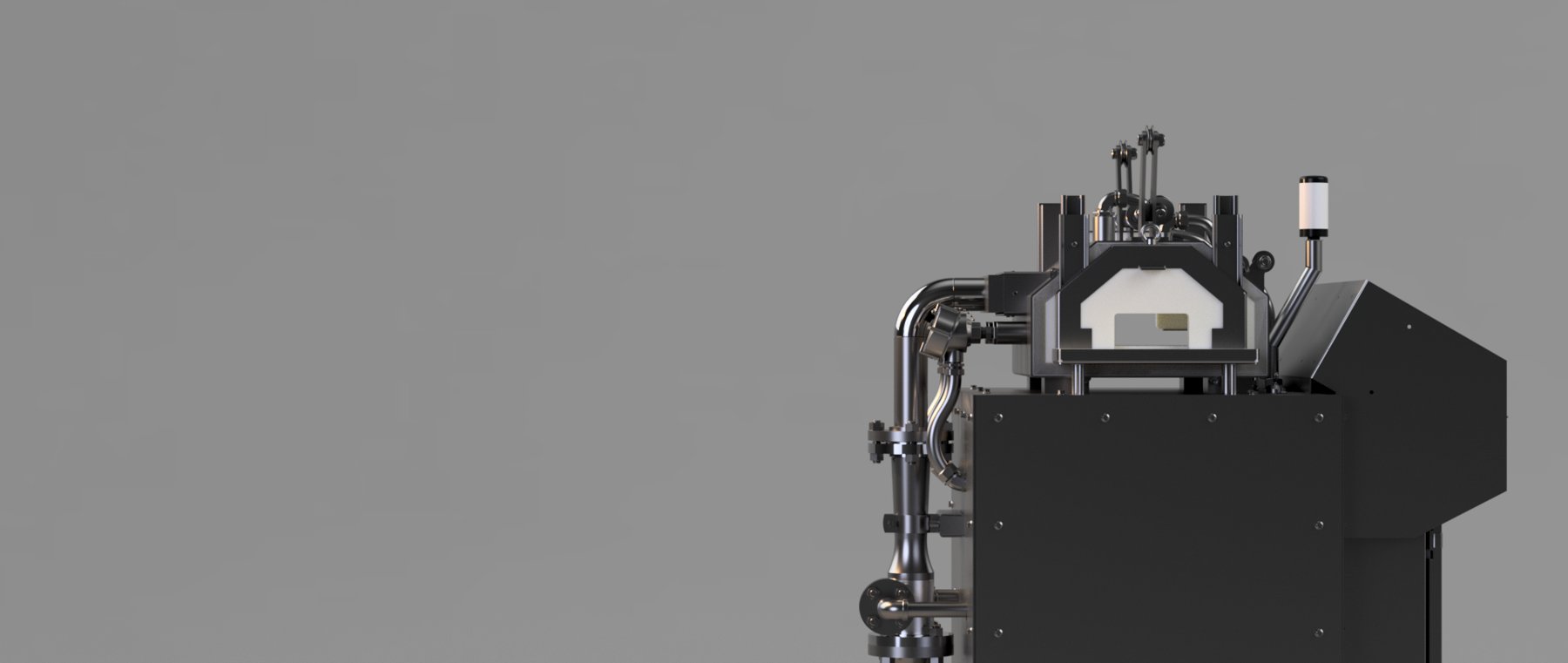
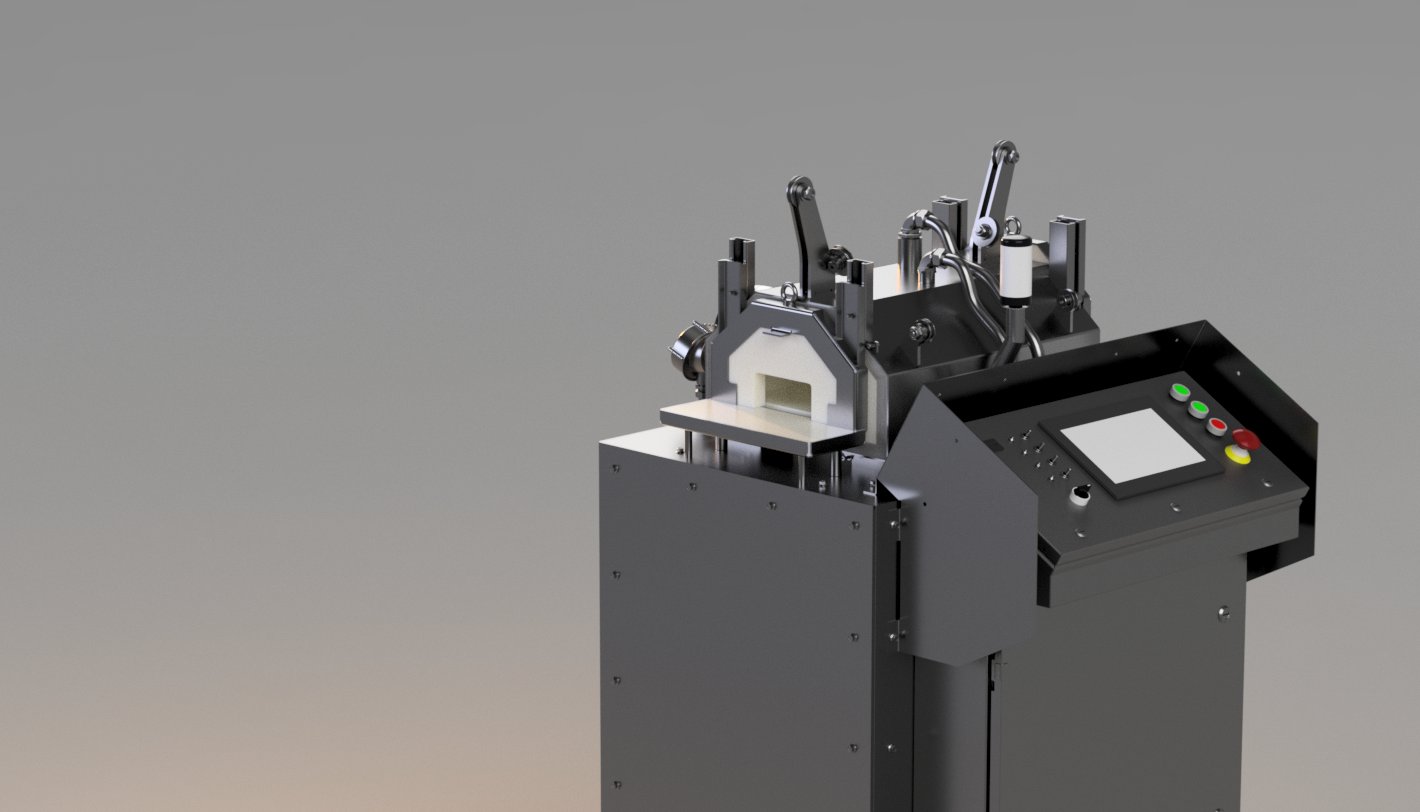
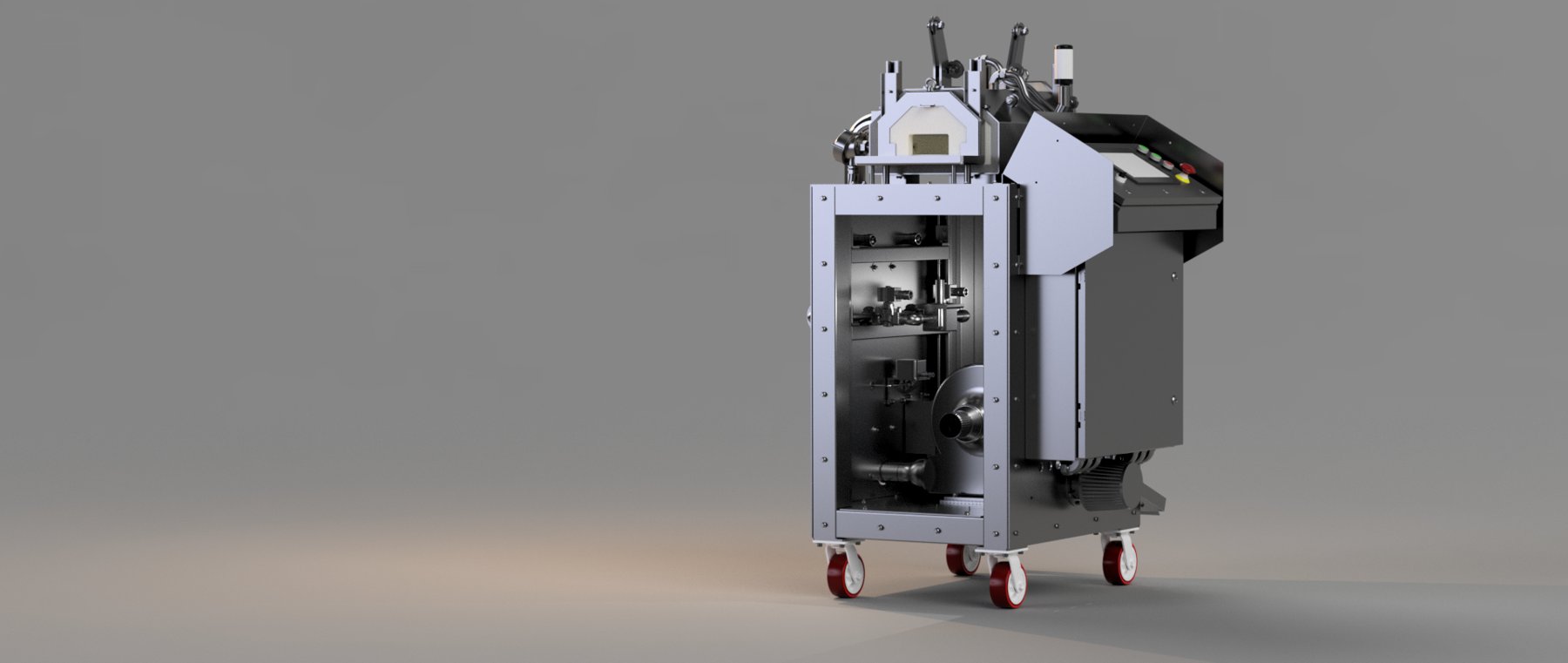
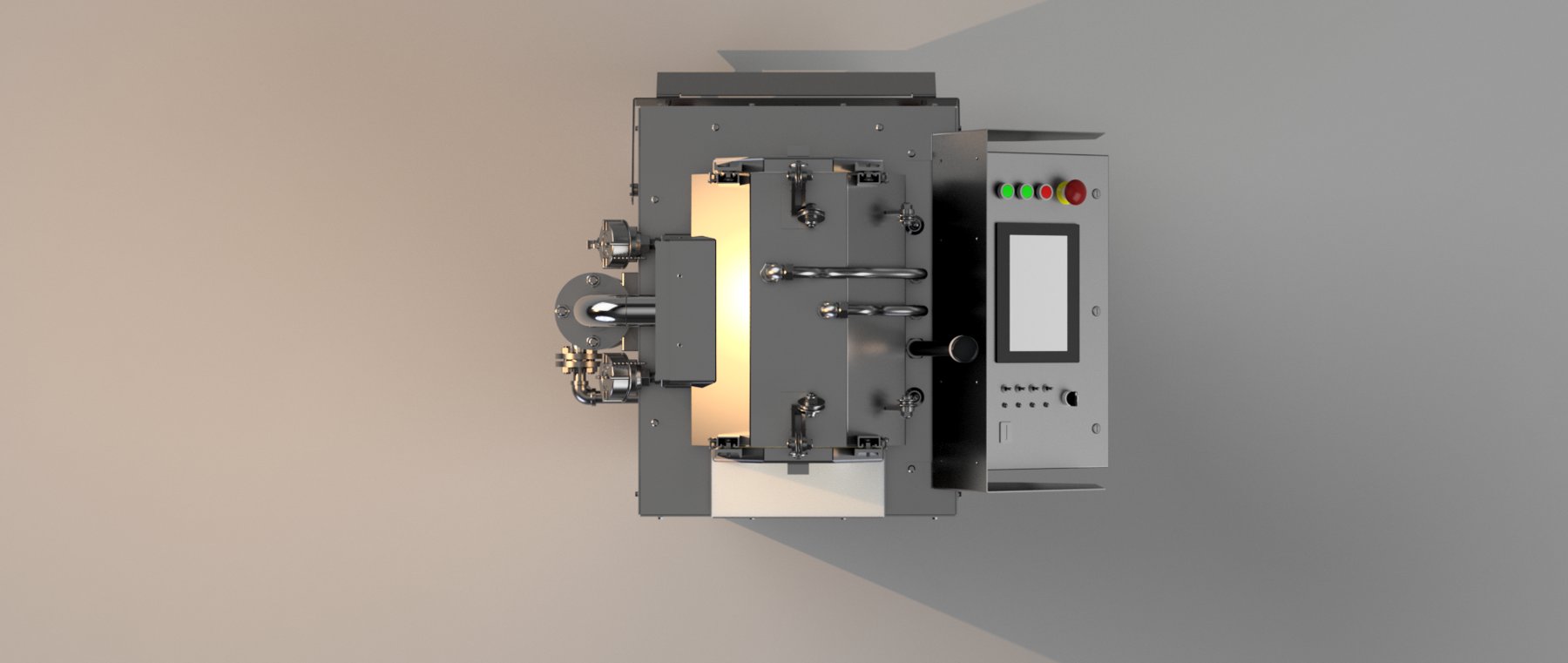
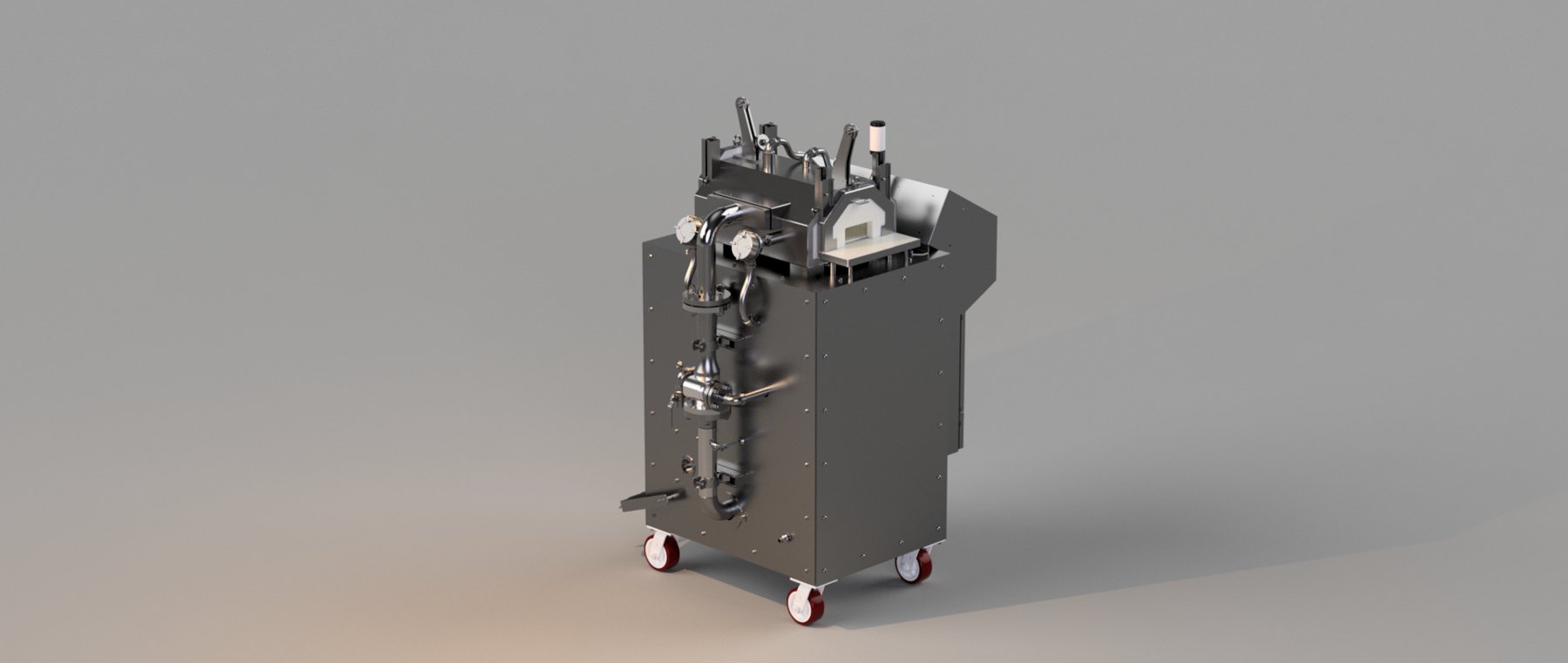
An automated propane-air forge in development, integrating mechanical design, a proportional air system, and PLC controls. Designed around a 2,400 °F operating target.
SCROLL TO EXPLORE ↓
01 / The project
System design
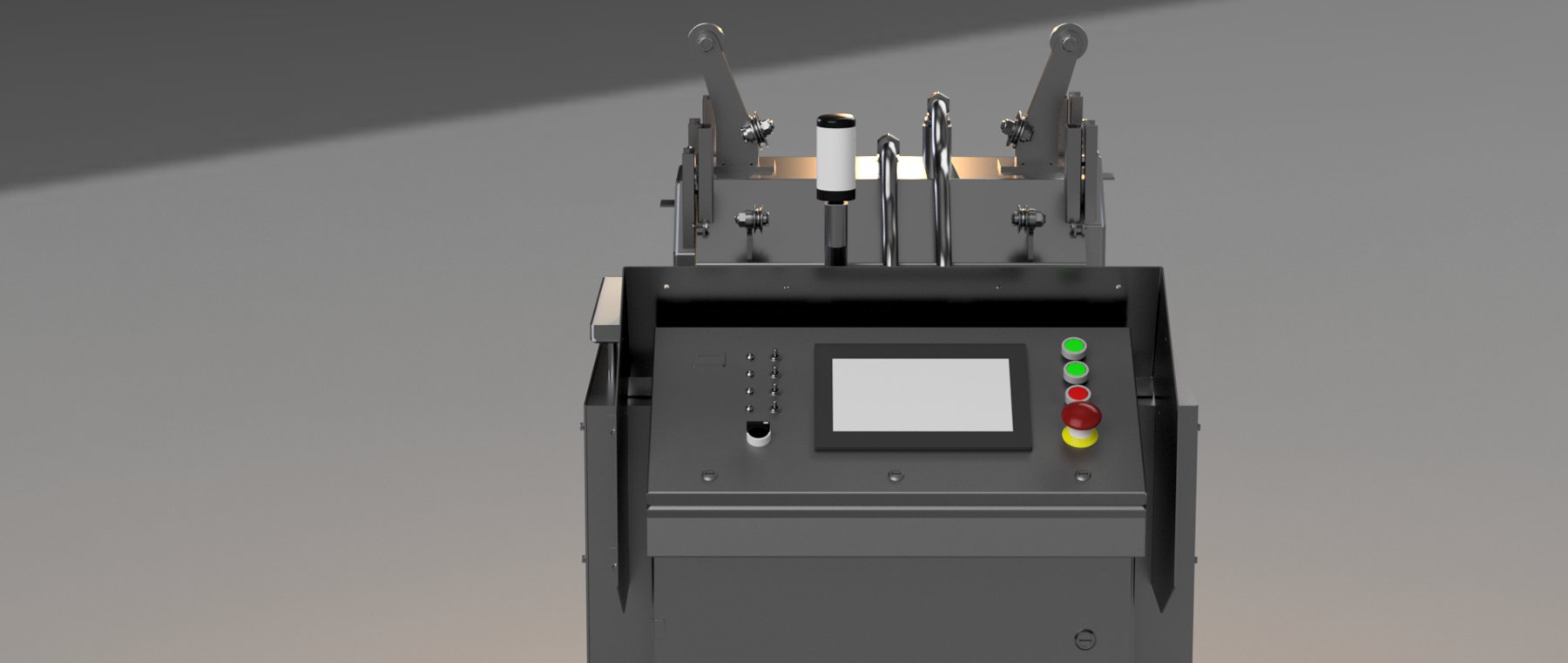
HELIOS brings the burner, air supply, fuel train, instrumentation, and operator controls into one system. The PLC and HMI are intended to simplify training and operation while supporting temperature and atmosphere control.
Add a CFD screenshotAdd a mixer render or CFD screenshot
02 / Design & development
Proportional air system
The blower drives air through a venturi nozzle, creating suction that entrains propane from an annular gas chamber. An adjustable choke trims the fuel opening, and a zero governor supplies gas near the mixer’s pressure reference. The PLC changes blower speed through a VFD to modulate heat input.
03 / Fabrication & testing
Manufacturing and controls
The controls design includes health checks, maintenance reminders, fault reporting, and lifecycle tracking. These are development goals; validation and commissioning results will be documented as the build progresses.
The blower sends air through a converging nozzle. As the air accelerates, its static pressure falls near the discharge into the mixing throat. This low-pressure region draws propane from the surrounding annular chamber into the moving air stream. The air jet supplies the momentum that entrains the fuel; the assembly is a blower-driven jet eductor.
Gas mixing
Propane enters an annular chamber around the nozzle and is introduced into the air stream near the nozzle exit. The receiver captures the air jet and entrained gas, and the mixing throat provides a shared flow path. The gradual outlet diffuser expands the mixed stream, reduces its velocity, and recovers part of its static pressure before the mixture travels toward the ribbon burner.
Choke adjustment
The adjustable choke changes the effective opening through which propane reaches the mixing stream. Restricting this opening reduces fuel flow for a given suction level; opening it admits more fuel. Its purpose is to trim the gas-to-air ratio during setup. It is a fuel-metering adjustment, separate from the blower-speed command used to change heat input.
Proportional control
The upstream zero governor supplies propane near the mixer’s pressure reference rather than driving it through the mixer at a high fixed pressure. As air velocity increases, the suction available to draw in propane also increases. With the choke set, this arrangement is intended to keep gas flow approximately proportional to airflow while the PLC and VFD vary blower speed. The operating range and mixture consistency still need to be verified against burner backpressure and test measurements.
Materials and machining
The mixer is designed around 304 stainless steel for corrosion resistance in a wet, outdoor shop environment. The internal nozzle, chamber, and receiver geometry are machined to establish the concentric flow passages and gas-metering surfaces. Turning produces the circular bores and tapers; milling and drilling produce the ports and locating features. The outlet uses machined sections with a continuous internal transition, fitted and TIG-welded into the stainless pipe assembly. Alignment and smooth internal joints matter because steps or offsets can disturb the jet, increase pressure loss, and change entrainment.
Controls
The Phoenix Contact PLCnext architecture discussed for HELIOS separates routine process control from safety-related control. The standard PLC handles temperature regulation, blower-speed requests, the HMI, and logging. A dedicated safety-control layer supervises the conditions that permit firing and commands fuel shutdown when those conditions are lost. This page describes the intended architecture; the final implementation and commissioning results are still to be documented.
The HMI is intended to show the measured forge temperature alongside the requested temperature, current operating state, and essential equipment status. An operator should be able to distinguish idle, purging, ignition, firing, shutdown, and lockout without interpreting raw PLC signals. This describes the planned interface rather than an existing screen layout.