Carbon Fiber & Maple Skateboard
A skateboard designed and made from the deck layup to the CNC-machined aluminum trucks.
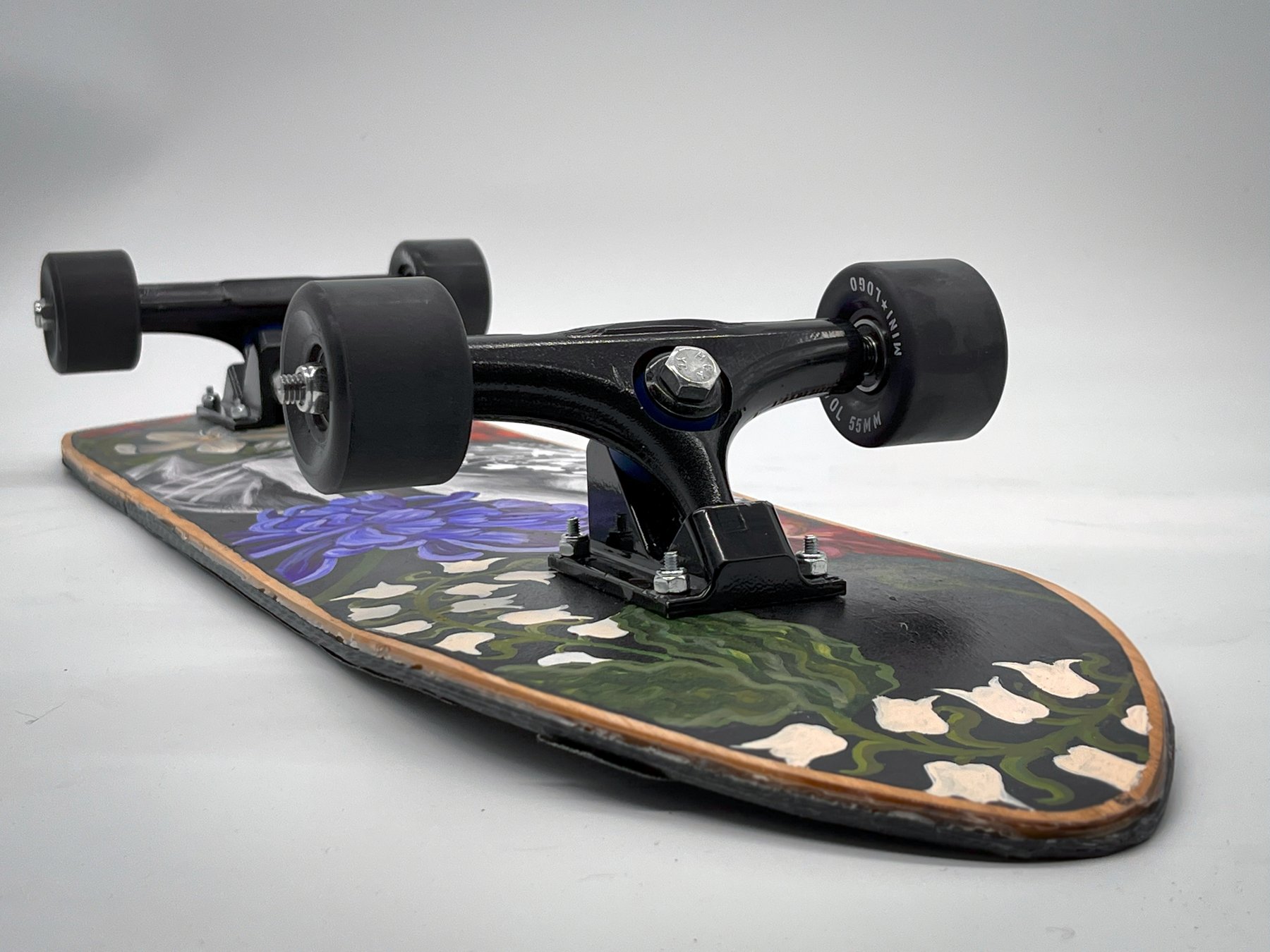
Carbon Fiber & Maple Skateboard
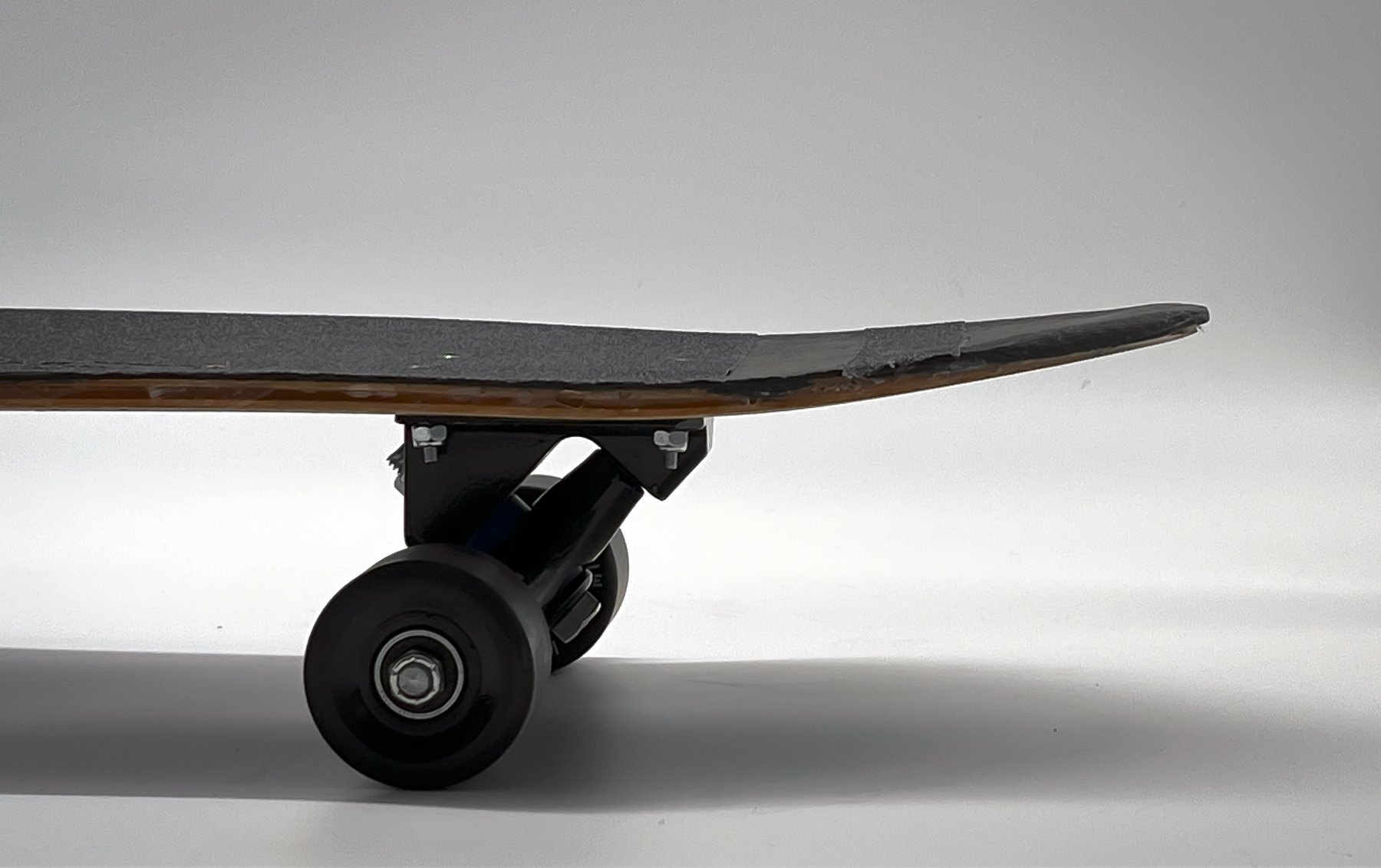
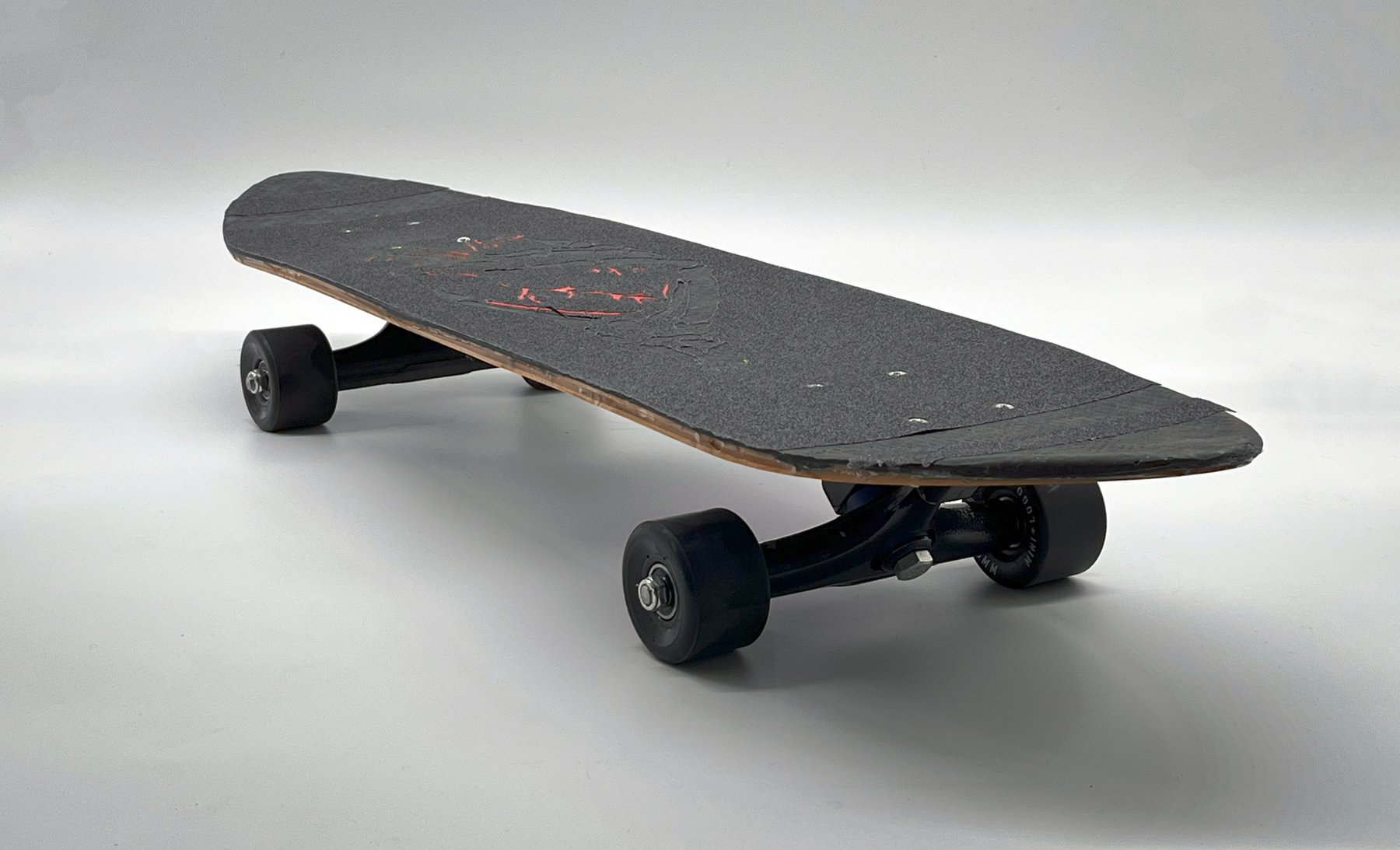
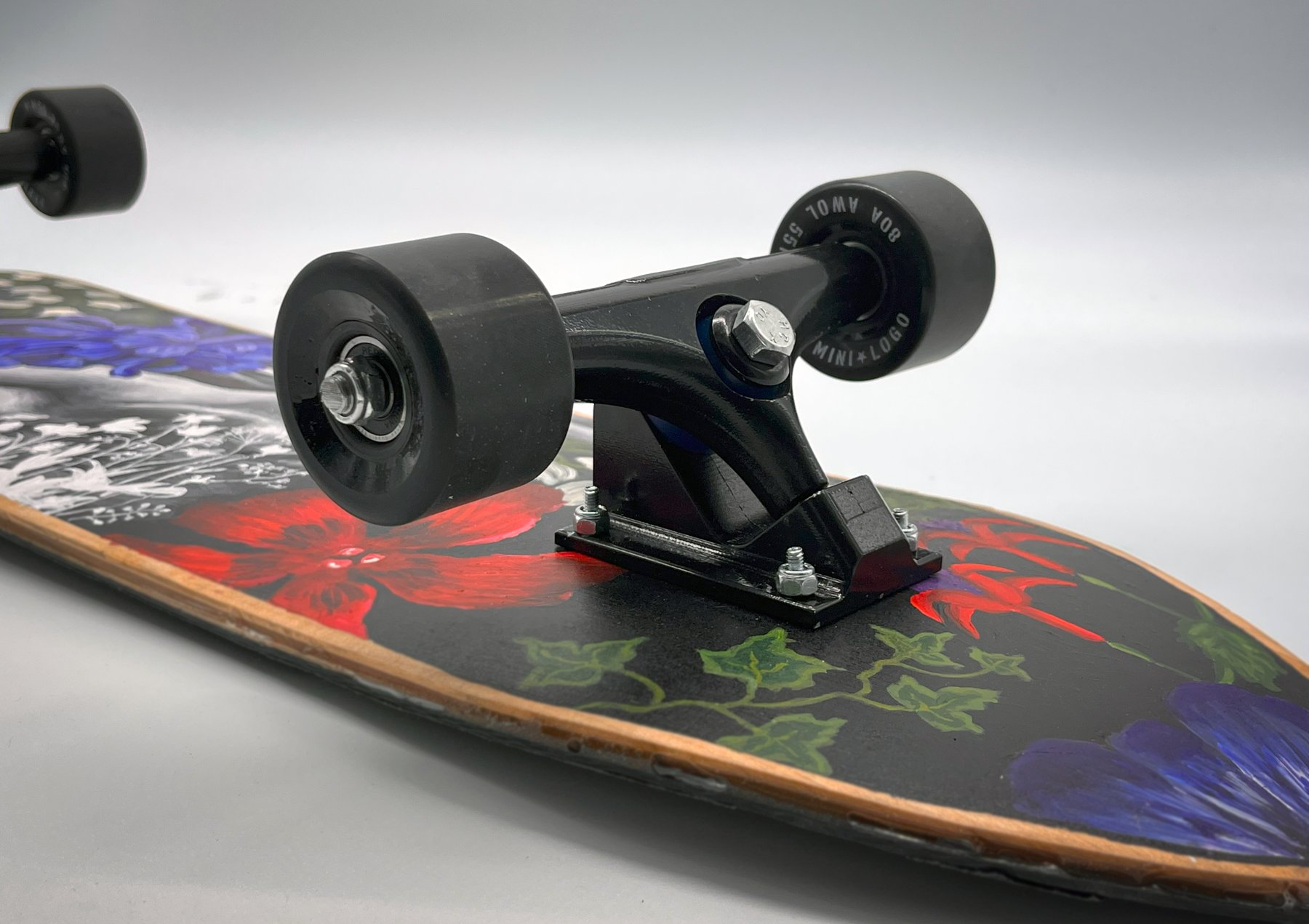
The finished board
Plywood prototype
I first made a thick plywood board as a full-size prototype. This let me check the deck shape and the assembled board before moving on to the maple veneer and carbon fiber construction.
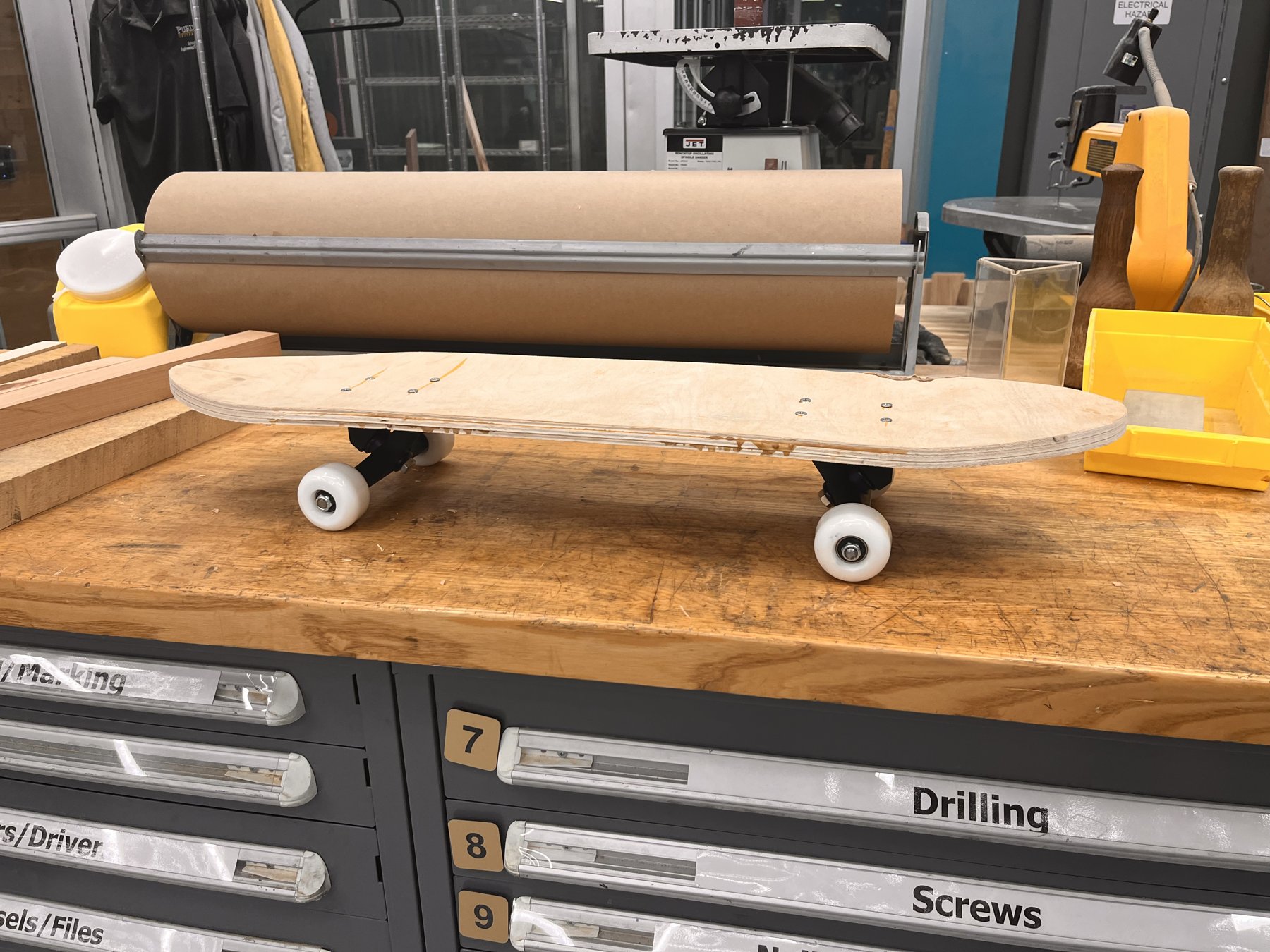
Full-size plywood prototype assembled with trucks and wheels
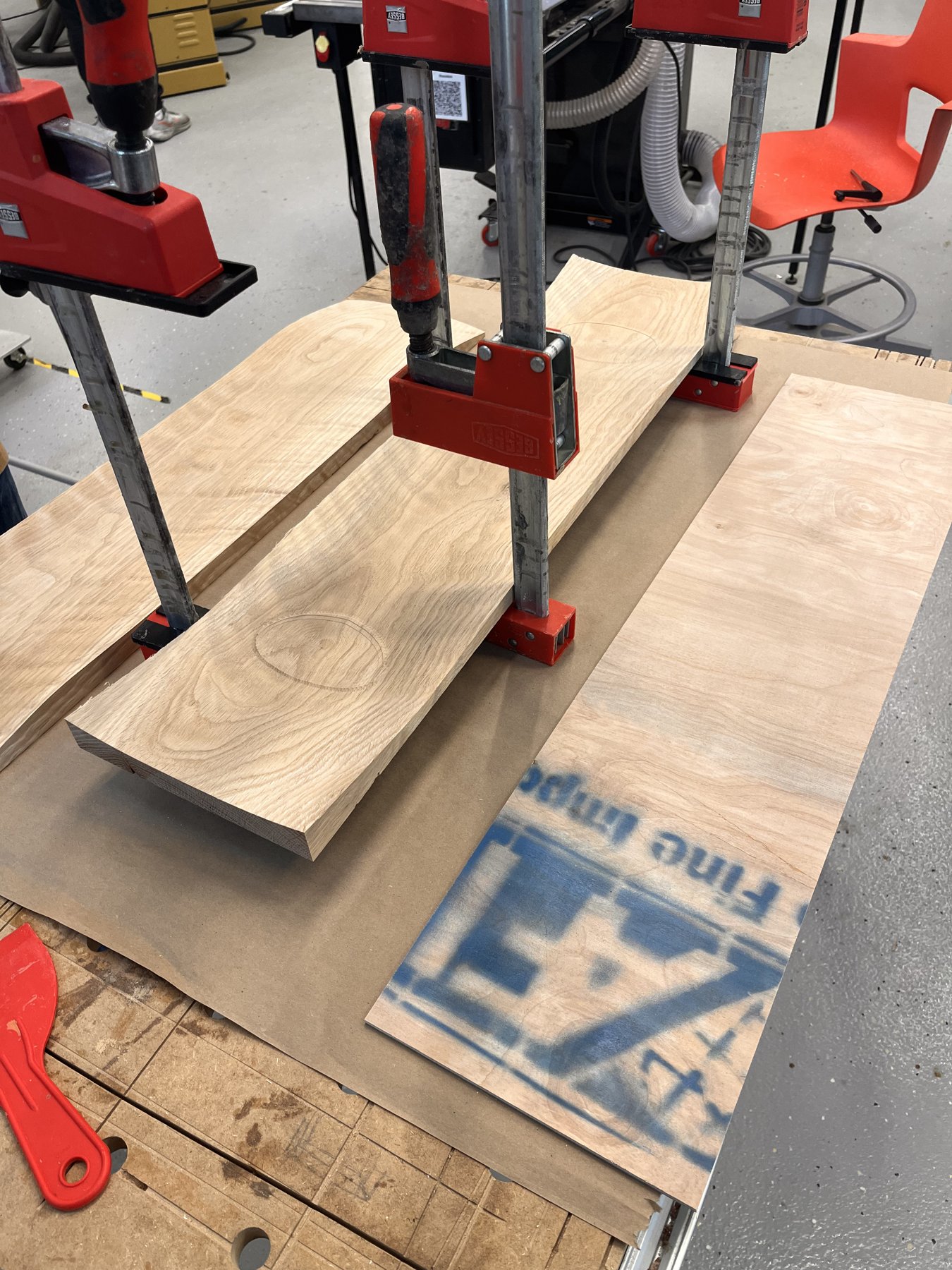
Clamping the early deck prototype
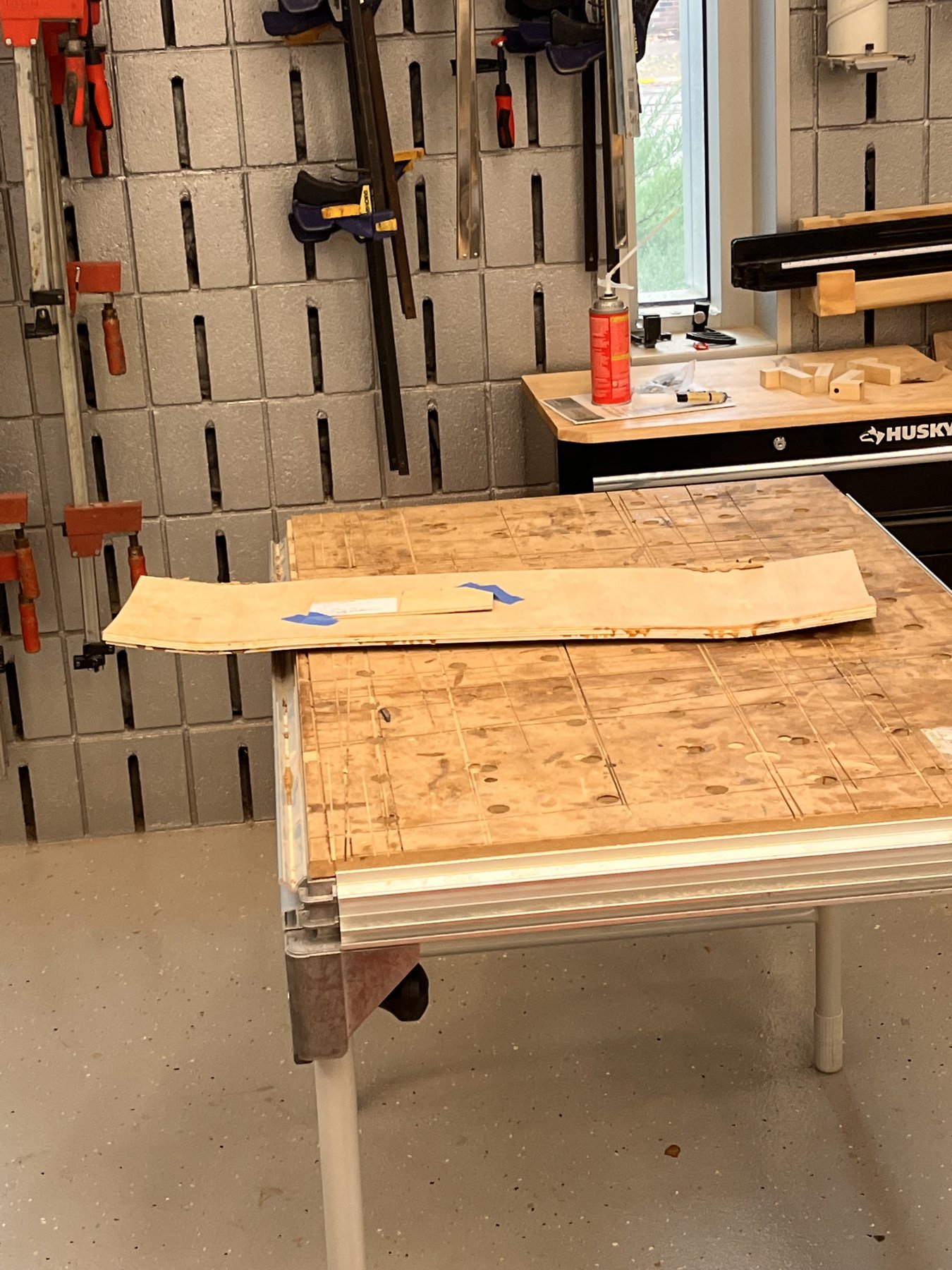
Shaping the plywood deck in the woodshop
Veneer preparation
I prototyped the veneers as well as the complete deck. Starting with rough lumber, I cut and processed maple into thin layers, then prepared sample layups to compare thickness and flexibility before selecting the final construction.
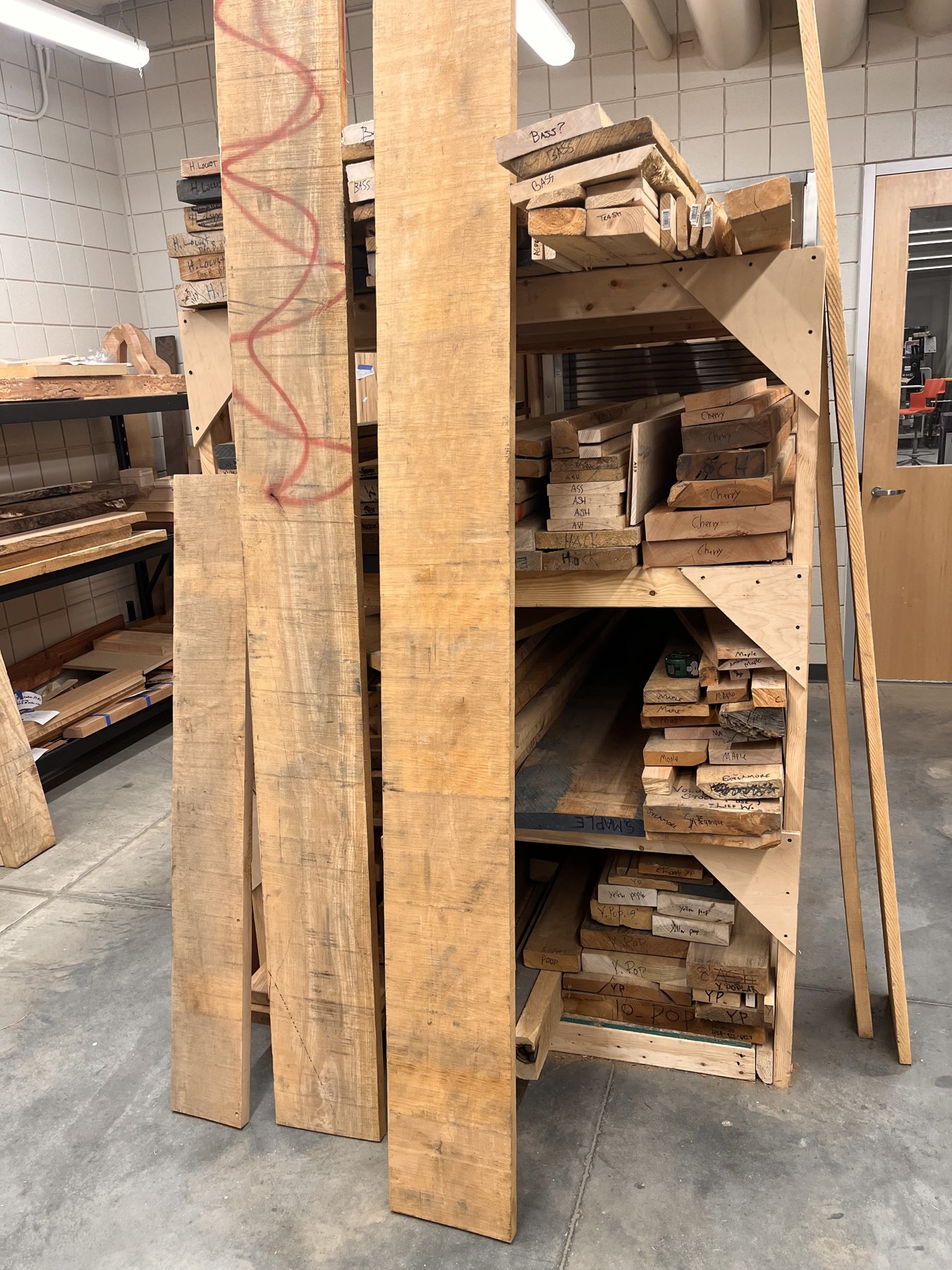
Rough lumber selected for the veneer work
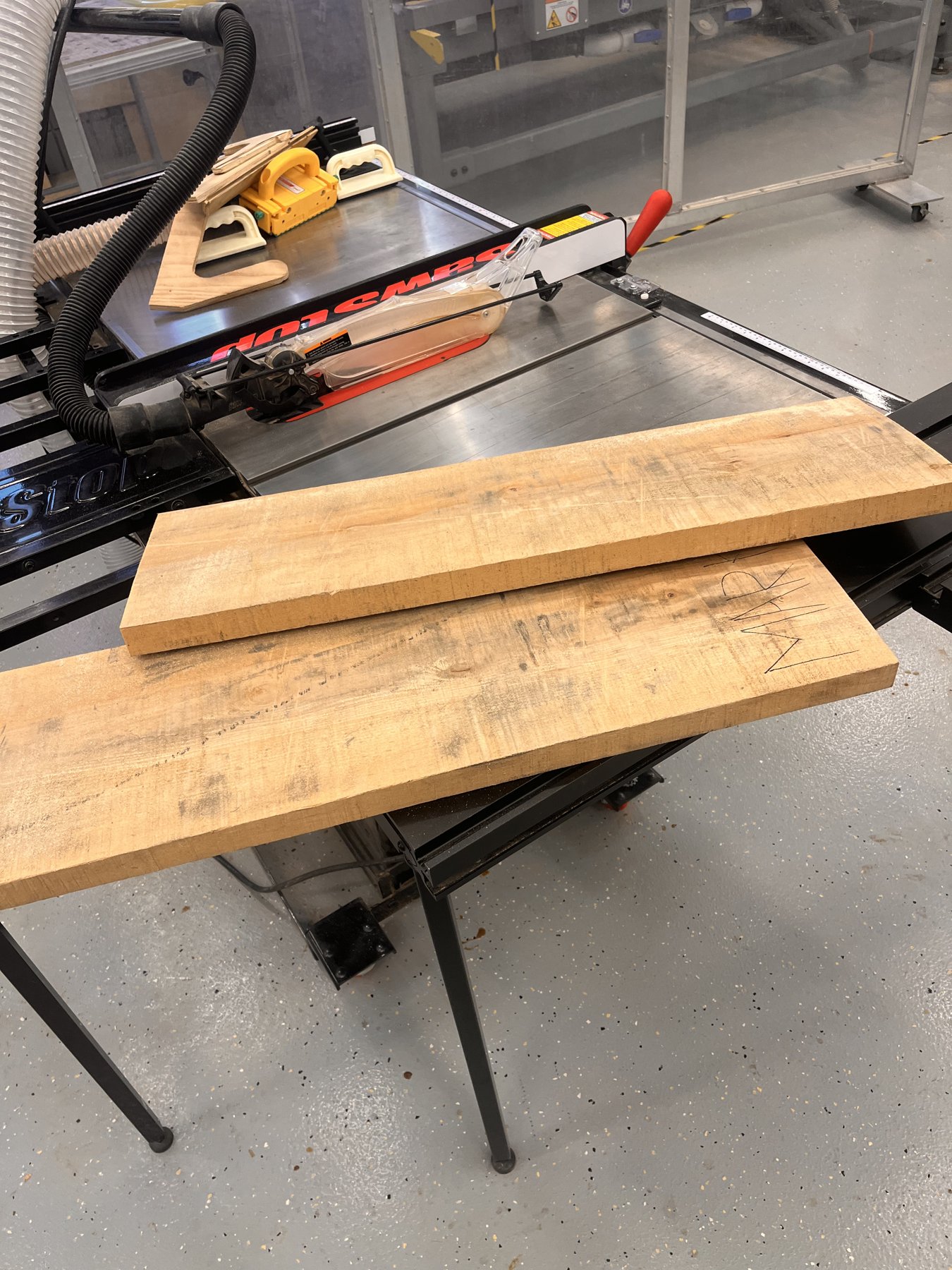
Preparing stock at the table saw
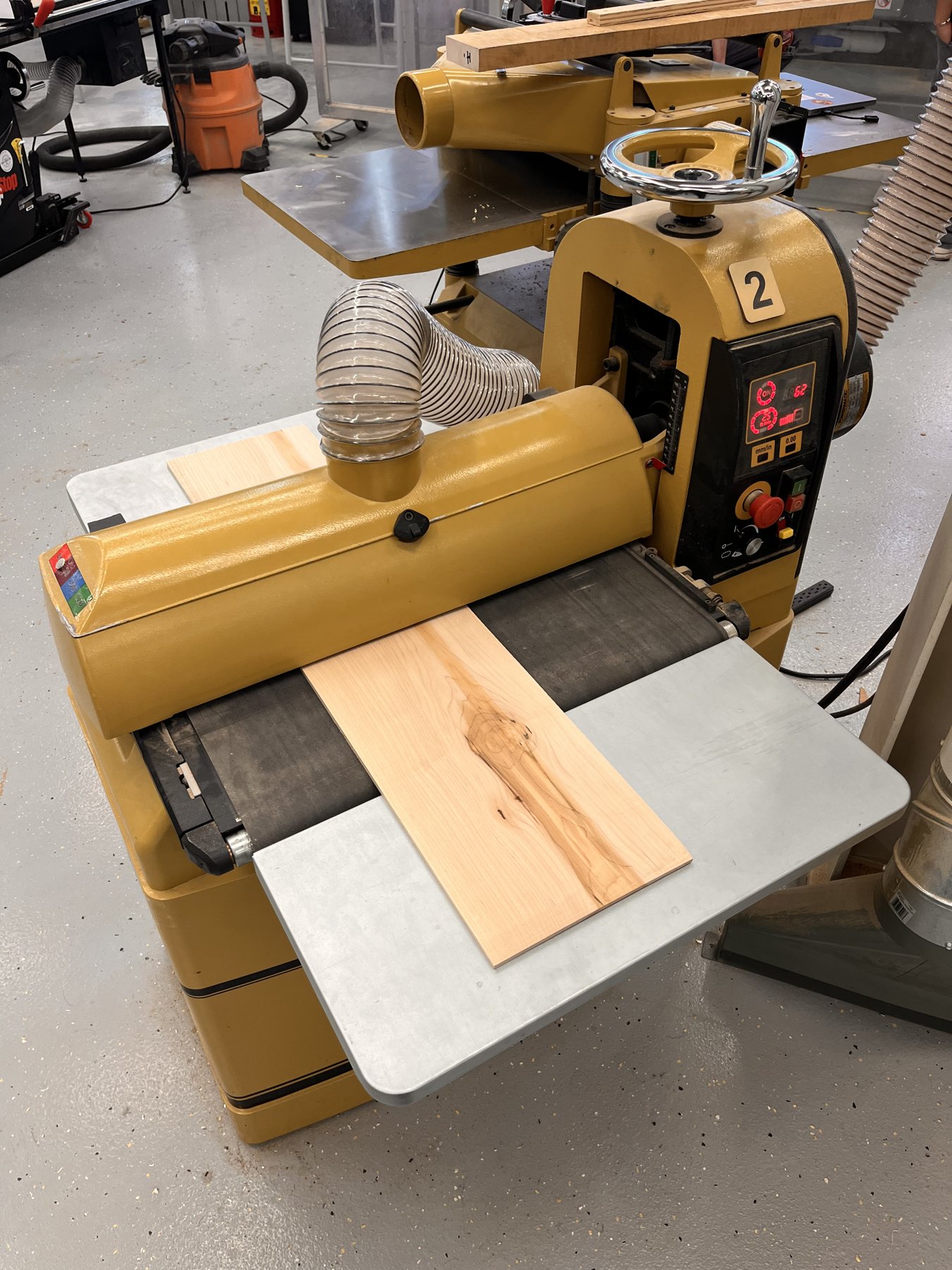
Processing a maple layer through the drum sander
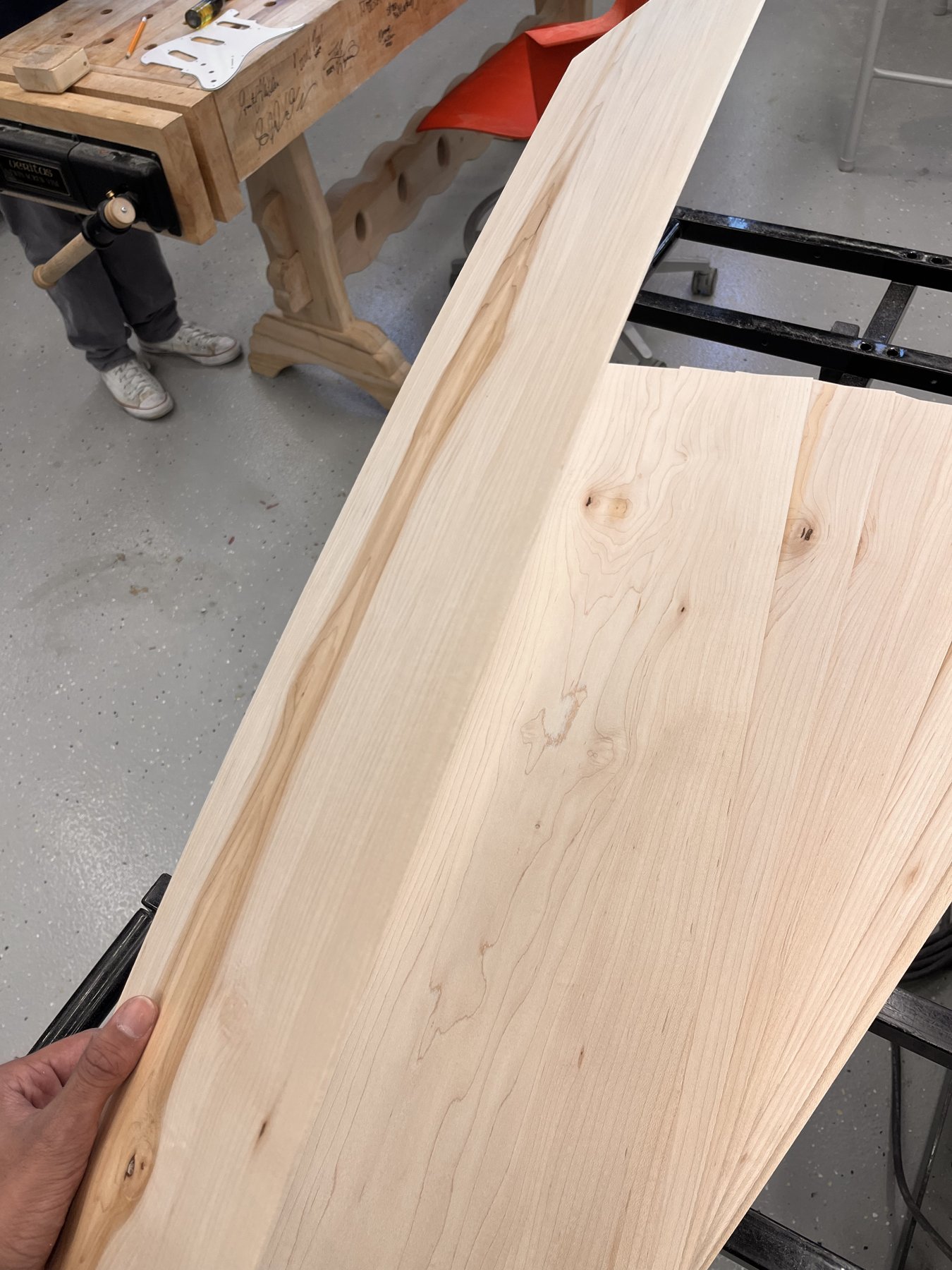
Checking a prepared maple layer
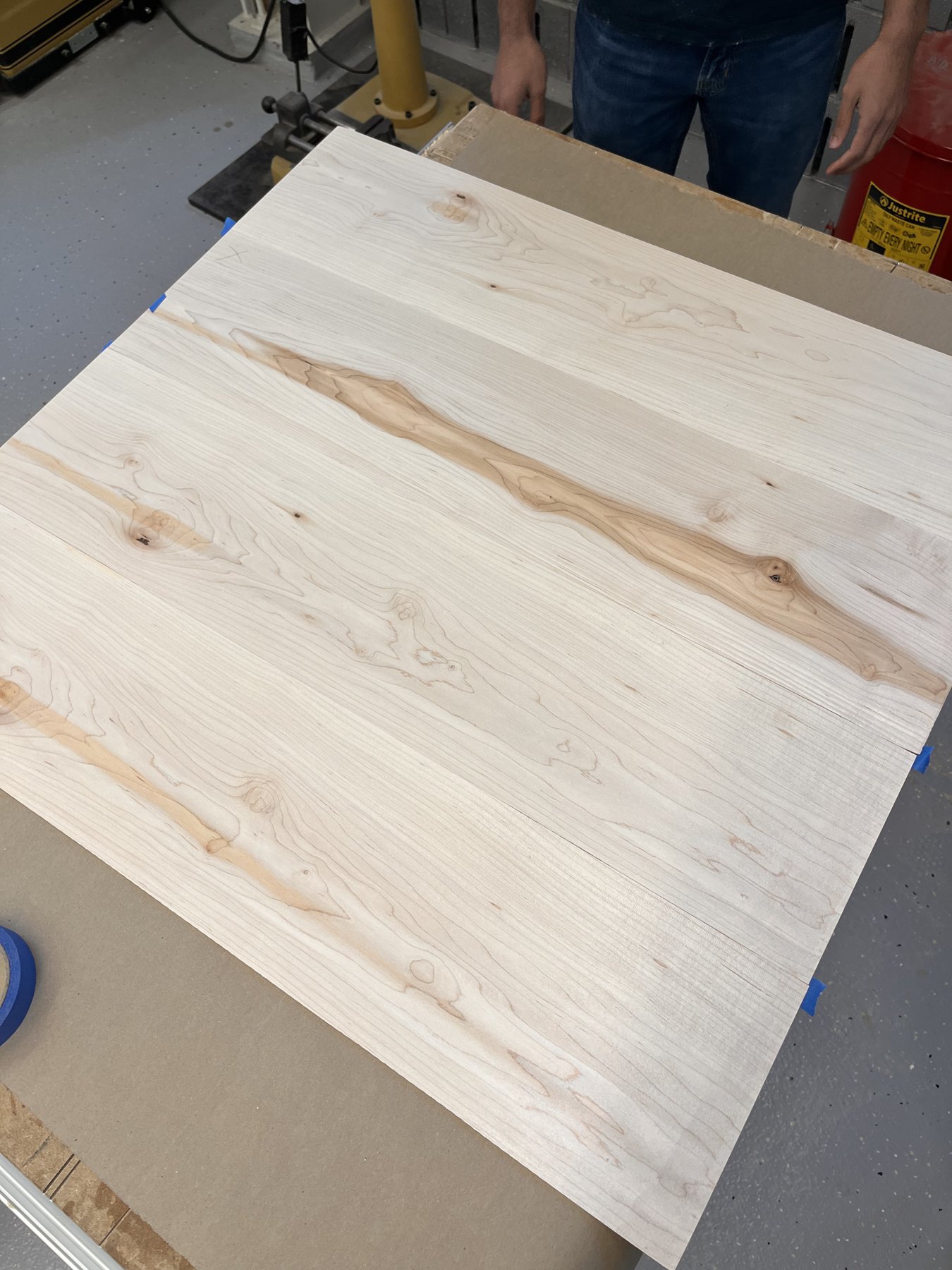
Maple layers prepared for the deck layup
Deck construction and testing
I cut maple veneers from raw lumber and processed them to thickness. Five test boards combined maple veneers and carbon fiber plies to explore strength, thickness, and flexibility. Destructive testing helped evaluate capacity and select a sufficient factor of safety.
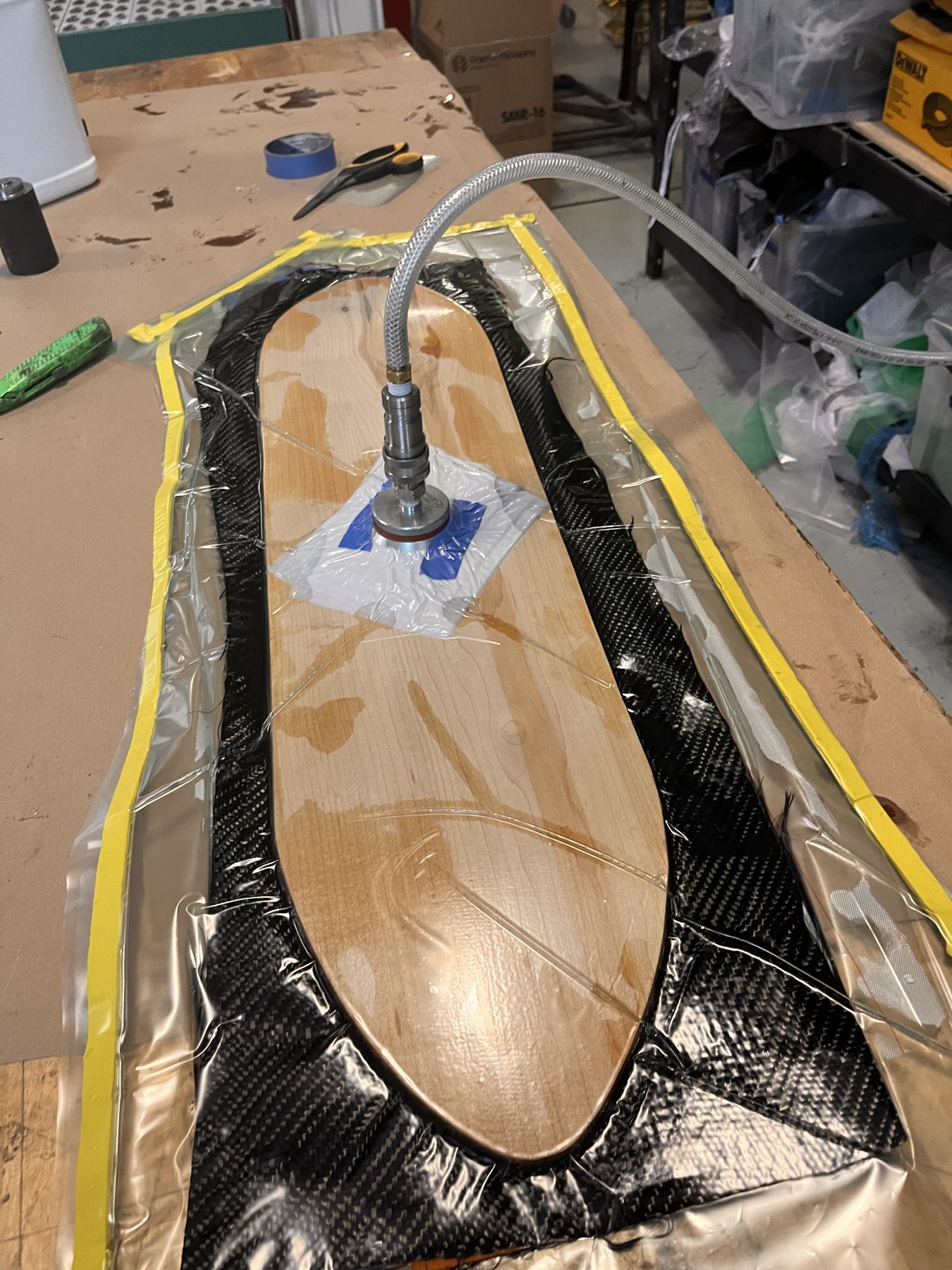
Five boards, one final design
Truck prototyping
I 3D-printed the truck design to check fit and function with the bolts, bushings, and bearings before committing to aluminum.
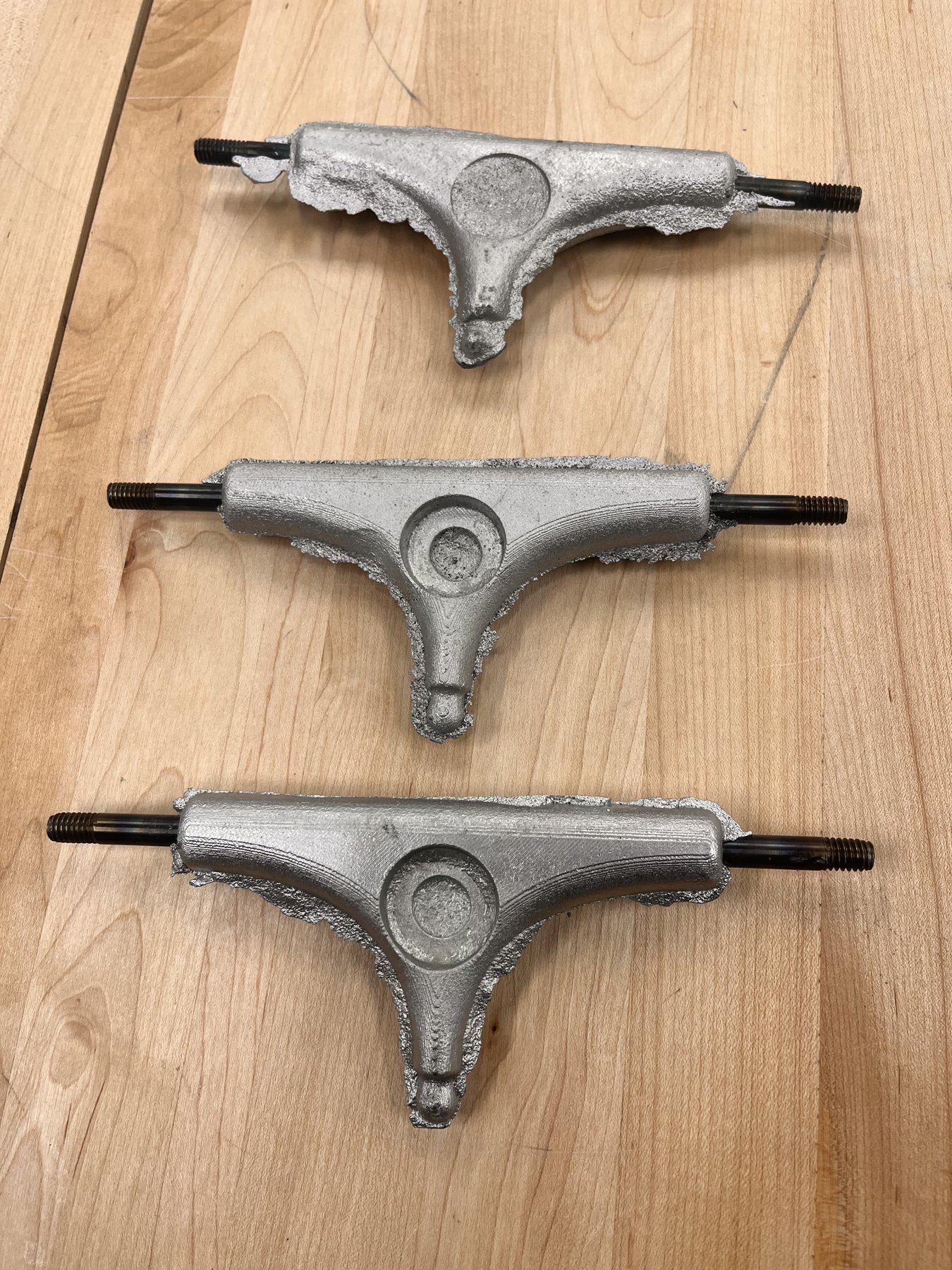
Prototype before machining
Truck machining
I developed the CAD and CAM and machined the trucks using both three- and five-axis mills. The geometry and fixtures evolved through the machining process.
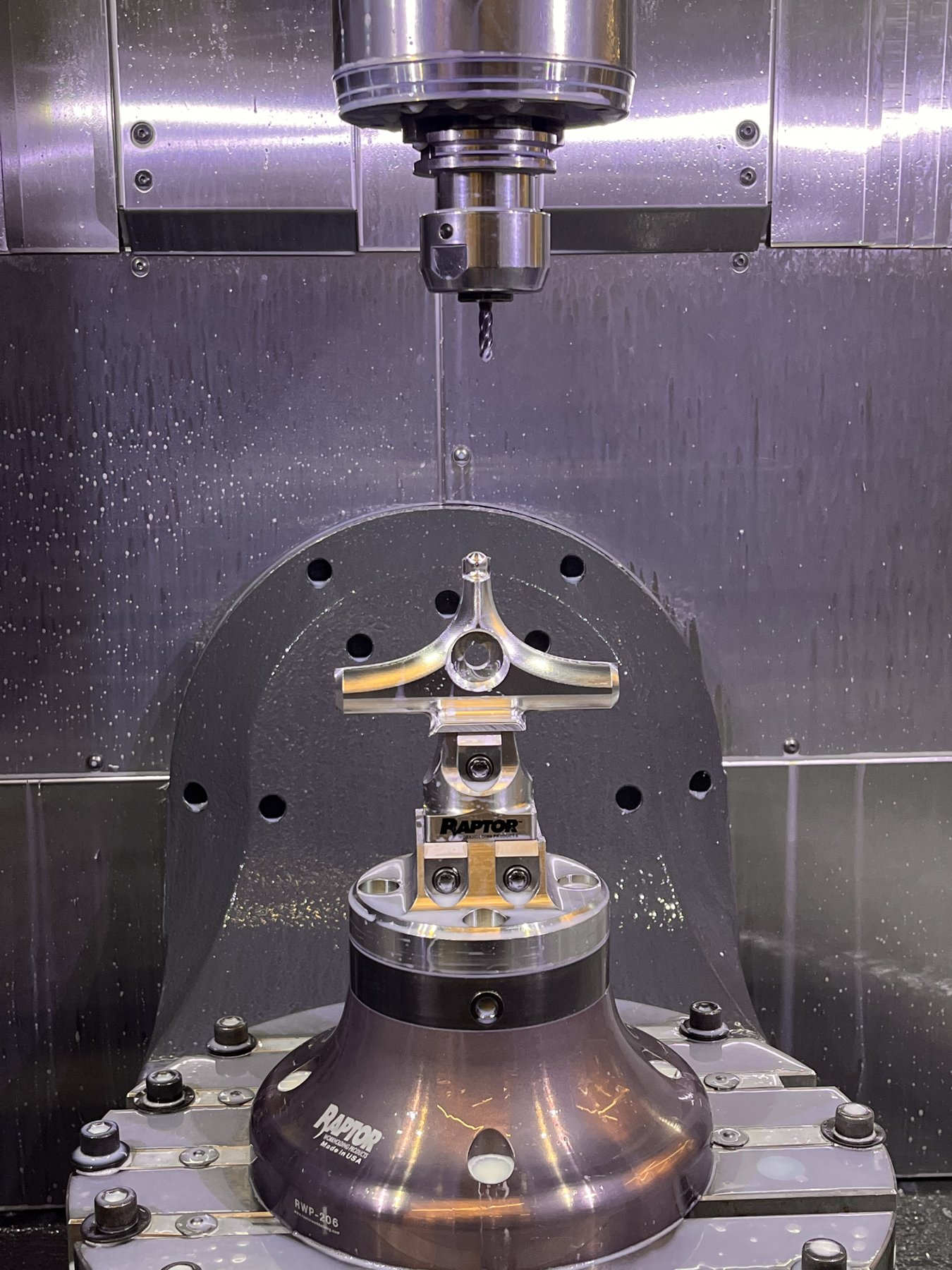
Three and five axes
Finishing and assembly
Powder coating gave the trucks their final finish and added protection. The finished board brings the composite deck, custom trucks, and artwork together.
The finished board
Deck machining
Shaping and machining the deck in the woodshop.
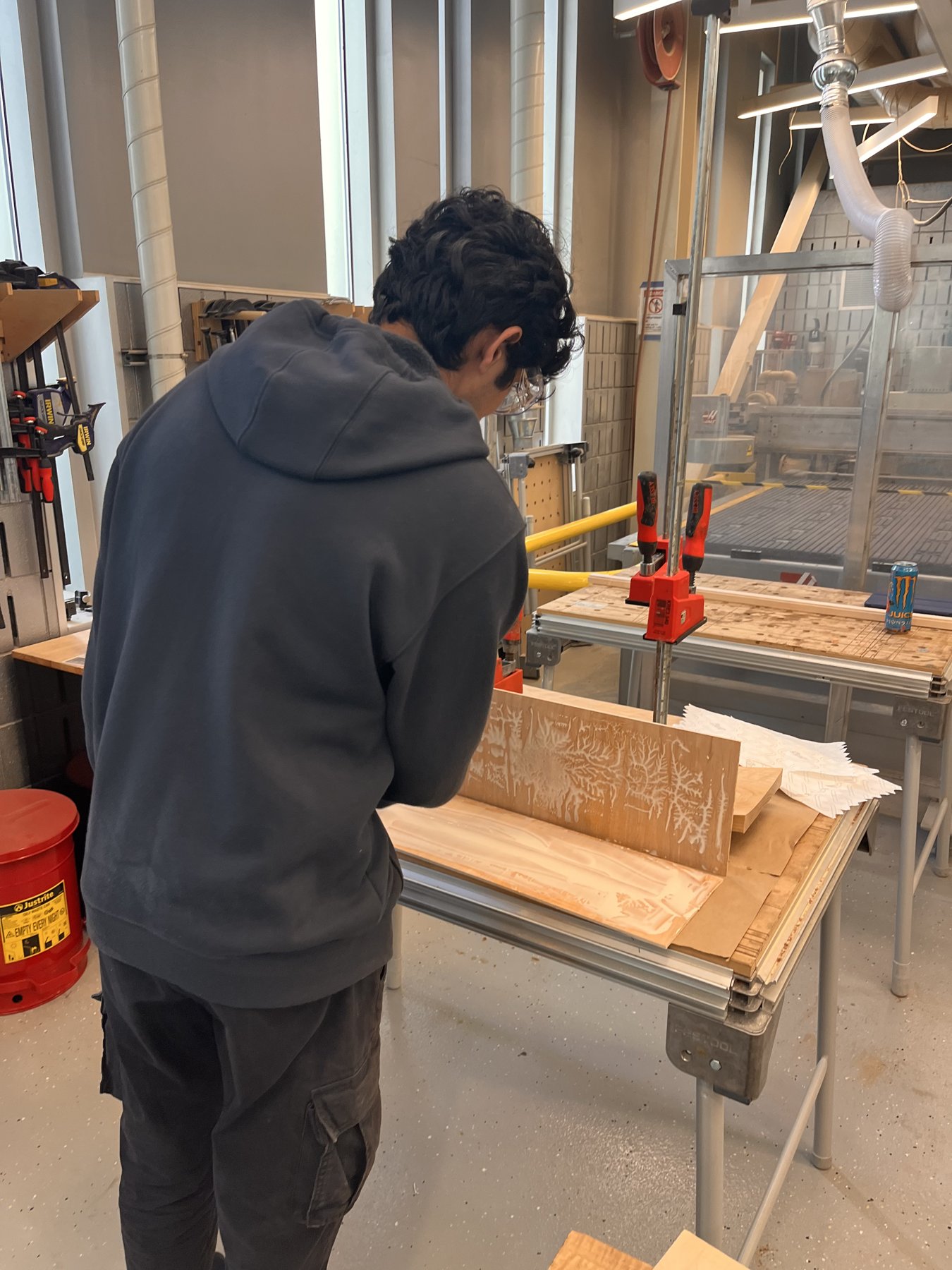
Routing the deck profile in the shop
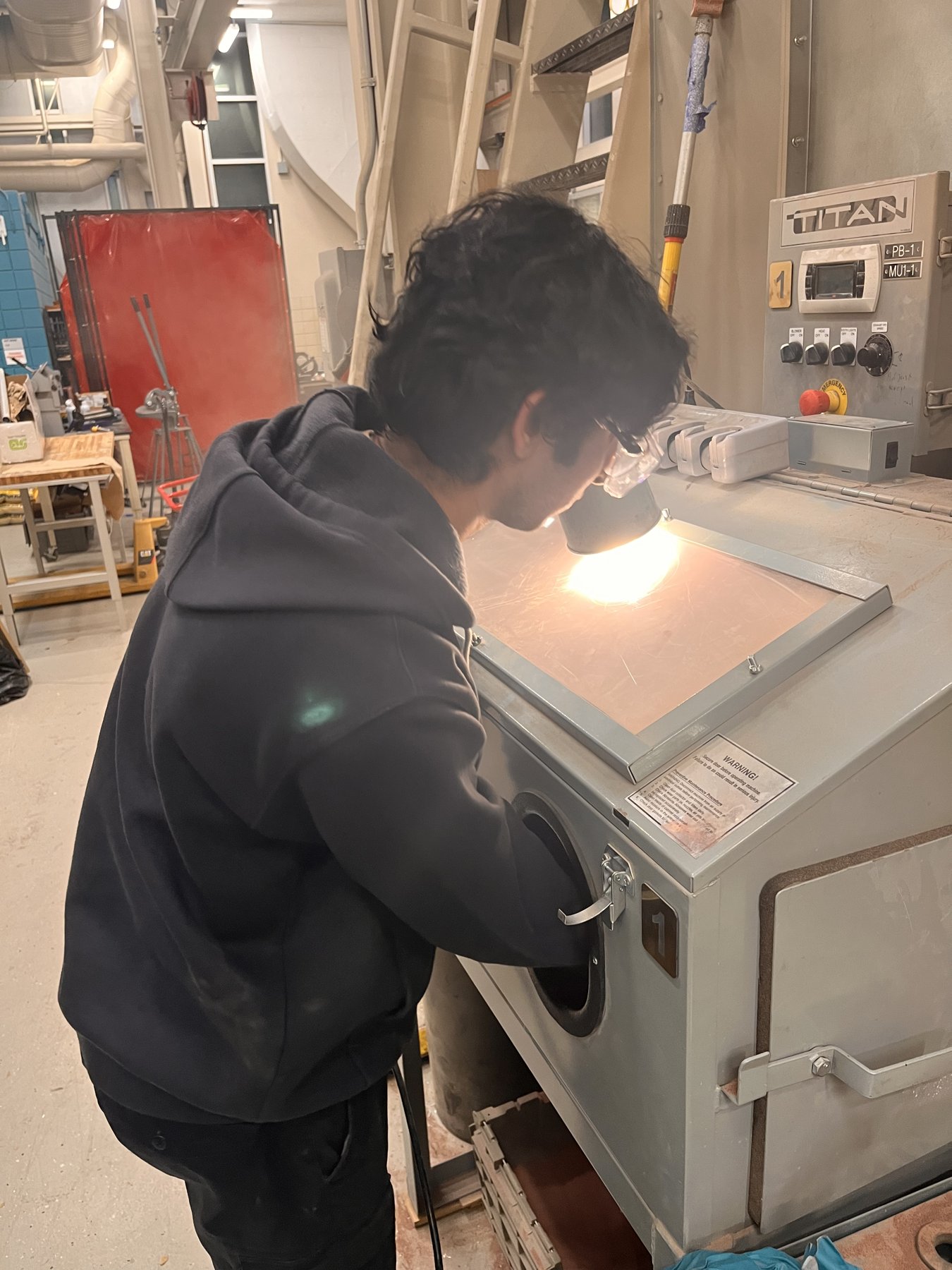
Machining the skateboard deck